

A Conversation with Jane Satterfield
Author of The Badass Brontës

Some books feel researched, and others feel inhabited. The Badass Brontës by Jane Satterfield belongs firmly to the latter category. From the very first poem, it’s clear that this work isn’t driven solely by literary reverence but by a deep intimacy, sustained attention, and a willingness to let the Brontë sisters transcend time and speak directly to us. What stands out most is the book’s range of perspectives. The Brontës are presented as historical figures, literary ancestors, cultural icons, and vividly alive presences—women who wrote under constraint, pursued ambition at great risk, and continue to be reimagined by every generation that encounters them. The poems acknowledge that inheritance is never simple; admiration can coexist with irony, anger, and joy. In this interview, we explore themes like literary masquerade and pseudonyms, women’s labor and creative survival, pop culture’s reanimation of the Brontës, and Victorian anxieties that still resonate today. This conversation feels especially timely, recognizing that the Brontës have never been confined to their era. Their work continues to shape the intellectual and ethical tensions that define literary culture. The pressures of ambition under constraint, along with the uneven distribution of voice and authority, remain central to how literature is created, read, and valued. This interview not only offers insight into the making of a remarkable book but also invites readers to reflect on why the Brontës still hold such power and the demands their work places on our critical imagination.
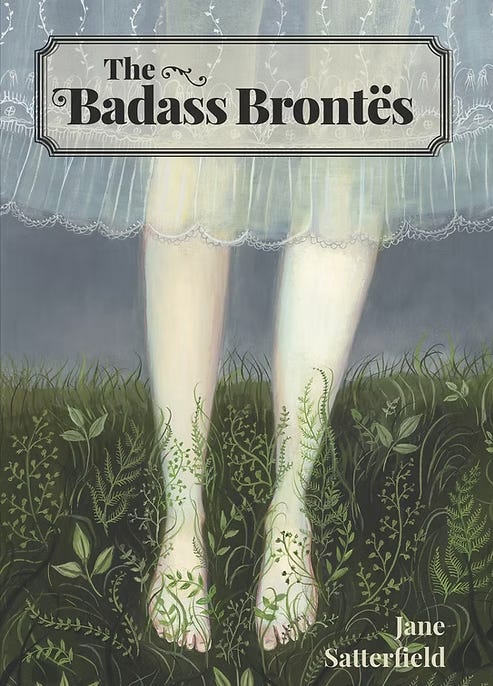
Diode: The Badass Brontës reimagines the Brontë sisters as historical figures, literary ancestors, and living presences. What first drew you to them as subjects, and how did your relationship to them evolve while writing the book?
JS: Thanks so much for these questions—I’ve had a long fascination with the lives and art of Emily, Charlotte, and Anne. There’s something magical about the fact that there were these three sisters, daughters of a clergyman, for whom writing begins in childhood as a kind of role-playing where they’re spinning tales of imaginary kingdoms, and gradually this gaming evolves into strong literary ambition. Then they write superb, gothic-inflected novels that continue to resonate beyond the Victorian era in which they lived and wrote.
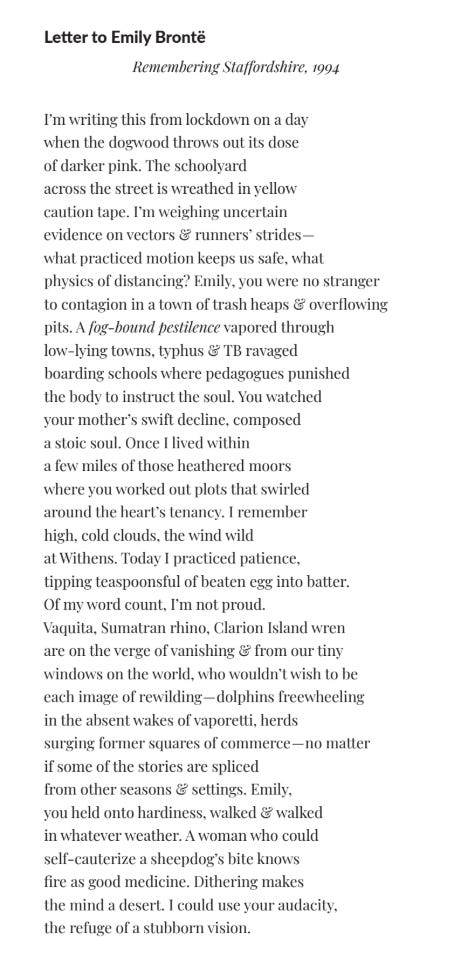
The parsonage they grew up in is a few steps from a church and graveyard, but also looks out to factories and wild moorland. Today, it’s a museum that regularly attracts literary pilgrims—Plath and Woolf both wrote terrific accounts of their visits. The poem “Haworth of Other Days” captures my impressions from my visit in the mid-nineties, when I was living in the U.K. (the postcard portrait of Emily I picked up is still on my desk). The day I saw the dining room table where they wrote, the dresses they wore, the tiny books they compiled, hand-lettered to look like newsprint, was when they truly came alive as presences.
I knew a book had to do more than recount familiar biographical details. What might their lives and art teach me? Why do they continue to inspire readers and writers? Literary scholarship offered some answers, but I also looked to film, TV, and other pop culture adaptations. “Which Brontë Sister Are You?” responds to internet quizzes (who knew?) that playfully align your personality traits with Emily, Charlotte, or Anne’s. And the villanelle, “The Most Wuthering Heights Day Ever,” pays tribute to the fans who annually re-enact Kate Bush’s dance performance for her 1981 hit, “Wuthering Heights.”
Diode: The word “badass” carries humor, defiance, and cultural charge. What does reclaiming that term for the Brontës allow you to do poetically and politically?
It’s a playful way of showing that every era reinvents the Brontës in its own way, including our own. It’s a way of showing that the Brontës stood up to attitudes and obstacles as enormous as any in our own time –obstacles only a true badass would be willing to take on and triumph over—and it also reminds us that behind those Victorian dresses and beautifully crafted prose, these were women driven by intelligence, talent, personal tragedy, and ambition to succeed in being heard against all odds.
Diode: How did your use of imaginative dialogue or monologue across time, letters, seances, etc. (including the Bell pseudonyms) allow you to cast light on issues of gender or authorship?
The idea of the sisters’ literary masquerade is fascinating. The Brontës decided that posing as men under the pseudonyms of Currer, Ellis, and Acton Bell would both preserve their privacy, improving their chances of publication and snagging good reviews. It was a clever ruse. But their work spoke so deeply of women’s interior lives and didn’t shy from presenting readers with what Anne called “unpalatable truths.” In the cento “Costumery” I take a wry look at early reviews of the sisters’ work (those of Wuthering Heights were especially vicious; plenty of artists can relate, including perhaps director Emerald Fennell whose new adaptation of the novel is receiving plenty of mixed press!). Rumors swirled around the identity of the Bells: were they one writer posing as three, were the novels co-authored by a husband and wife? How long could such a masquerade last? These questions are the backdrop of “The Brothers Bell Plead Publishers Not to be Unmasked.” It’s enraging to think of the broader cultural context behind their choice; at the same time, the book also celebrates the ferocity of the Brontës’ individual spirits and creative vision.
Diode: Many poems foreground women’s labor, intellectual ambition, and creative survival under constraint. How do you see the Brontës’ struggles resonating with the lives of writers, especially women writers, today?
The more time I spent with the Brontës, the more parallels I found between their time and our own. They watched their local landscape get chewed up and polluted by industrial development; disease was rampant—that’s just a small part of the historical connections.
At the same time, quite a few poems reference the stress and tedium of domestic work, as well as the exploitation of teachers and governesses by employers. “Owning the Charlotte Brontë” does this through the lens of an actual McMansion model named for the author—another example of contemporary marketing glorifying the darker realities and constraints of the past. Ordinary homes would not have been outfitted with advertised amenities like sunken tubs or expansive closets for stashing craft supplies—in the Brontës’ world, needlework was necessary clothing repair. It’s a strange irony to see an author turned into a brand and writing portrayed as a luxury lifestyle choice, for sure.
For me, the Brontës have come to feel like literary kin; they speak to a need for literary sisterhood that transcends time and place. It’s wild to think of Harriet Beecher Stowe, a popular author in her time, seeking a literary sister through supernatural contact, as I explored in “Charlotte Brontë: The Séance,” based on actual accounts of her experiments in spiritualism, which Stowe shares in transatlantic correspondence with fellow female novelist George Eliot.
Diode: What are you working on now, and are there upcoming readings, events, or projects you would like readers to know about?
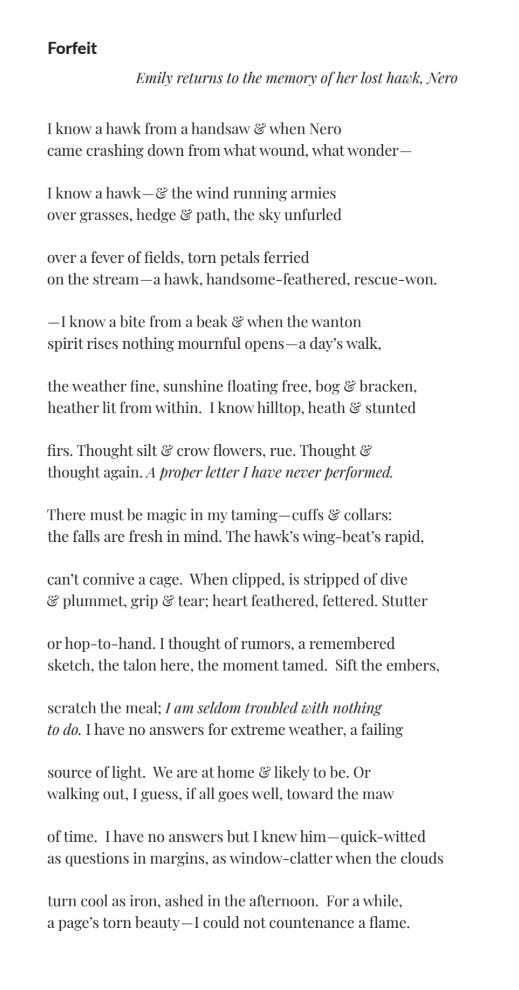
Thanks for asking—the Brontë sisters were fond of animals, and there is strong environmental awareness in their work, which is interwoven throughout The Badass Brontës. My new book, Luminous Crown, a collection of ecopoems, is really an outgrowth of this poetic dialogue. I was honored that the book won the Tenth Gate Prize and will be out in the summer of 2026 from Word Works Press.
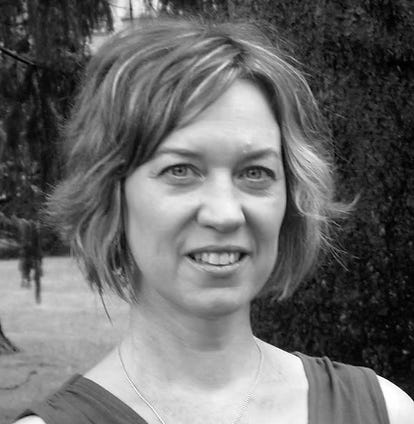
Jane Satterfield is the author of six books of poetry, including The Badass Brontës (Diode Editions, 2023) and Apocalypse Mix (Autumn House, 2017). Her memoir Daughters of Empire received multiple national nonfiction awards. With Laurie Kruk, she co-edited the anthology Borderlands and Crossroads: Writing the Motherland.
She has received a National Endowment for the Arts fellowship, Maryland State Arts Council awards, and major poetry prizes in the U.S. and U.K., including the Bellingham Review 49th Parallel Poetry Prize and the Ledbury Festival Poetry Prize. She has held fellowships and residencies at Sewanee, Bread Loaf, the Arvon Foundation, and the Vermont Studio Center, among others. Her work appears widely in journals such as American Poetry Review, The Common, Ecotone, Missouri Review, and Orion. Born in Corby, England, she holds an MFA from the University of Iowa and is a professor of writing at Loyola University Maryland.